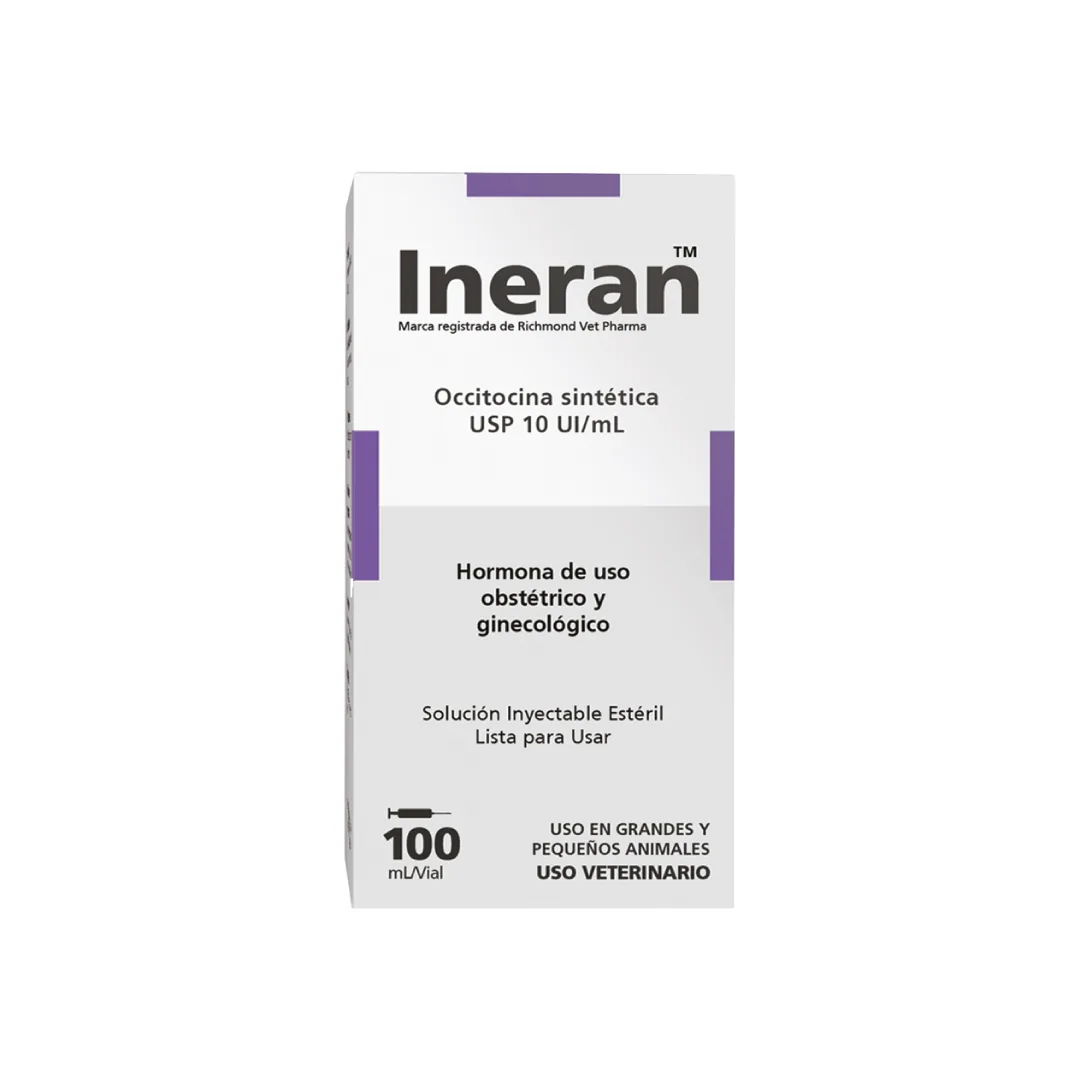
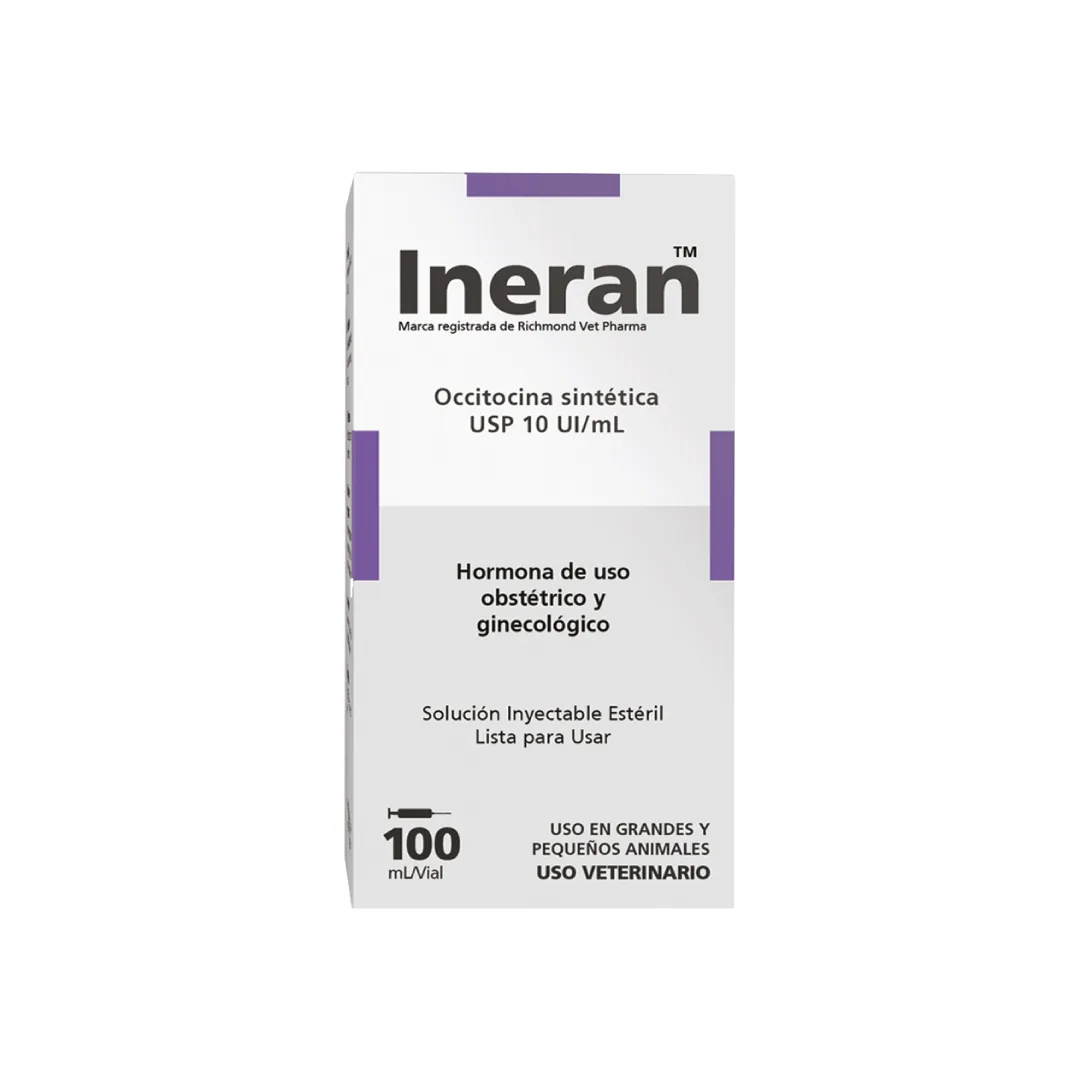
Ineran
Laboratorio:
Richmond
$22.99
Out of stock
USD
/ unidad
El presupuesto final se adapta según el volumen solicitado y el destino de entrega.
- Distribución oficial habilitada por SENASA Establecimiento oficial y normativas sanitarias vigentes
- Cadena de frío garantizada Monitoreo térmico para biológicos y sueros
- Dirección técnica y asesoramiento veterinario Atención profesional especializada en medicina equina
- Envíos nacionales e internacionales especializados Acondicionamiento térmico y logística segura
Ineran
$22.99
USD
Out of stock
Highly purified oxytocin-based aqueous hormonal solution for injection, for obstetric and gynecological use in swine, horses, sheep, cattle, dogs, and cats. Oxytocin: 10 IU. Excipients q.s.: 1 mL. ACTION Ineran is highly purified oxytocin, obtained by synthesis of the original active ingredient, extracted from the posterior lobe of the pituitary gland of domestic animals intended for slaughter. Ineran is an aqueous injectable solution containing the equivalent of 10 USP units of oxytocin with less than 0.2 units of vasopressor activity per mL of solution. It has no antidiuretic activity. Bioactivity: Ineran acts directly on the smooth muscle of the uterus in all species, producing rhythmic and synchronous contractions. It has been demonstrated that in certain animal species, the cervix typically does not respond with contraction to the effects of oxytocin. The degree of uterine activity induced by the effects of oxytocin depends largely on the stage of the reproductive cycle in which the animal is at the time of administration. The levels of estrogen and progesterone during the different phases of pregnancy act as the primary regulatory mechanism for oxytocin’s effect on the uterine muscles. During early pregnancy, the uterus is relatively insensitive to the action of oxytocin, with sensitivity increasing as pregnancy progresses toward term. Ieran has a specific effect on milk let-down and exhibits galactagogic activity. The mechanism by which milk is released from the mammary gland is still unknown, but it is assumed that oxytocin acts directly on certain components of the smooth muscle in the mammary gland, such as the myoepithelial cells surrounding the alveoli that make up the gland. One proven effect of oxytocin is the drug’s ability to effectively promote milk let-down. For obstetric use, oxytocin may be administered intravenously, intramuscularly, or subcutaneously, under appropriate aseptic and antiseptic conditions. To achieve a faster effect in stimulating milk ejection, the intravenous route is the most appropriate. Following intravenous administration, the drug acts on the uterine muscles immediately. When administered intramuscularly, its effect becomes apparent within 3 to 5 minutes. In dogs, the duration of the drug’s effect, after intravenous, intramuscular, or subcutaneous administration, is 13 to 20 minutes, respectively. INDICATIONS It is indicated for its action on the uterine muscles in the following conditions: Induction of labor. Acceleration of normal labor or reversal of uterine inertia. Postpartum expulsion of lochia and/or retained placenta. Uterine contraction and recovery following a cesarean section and control of uterine hemorrhage. Stimulation of milk let-down in a gland under appropriate physiological conditions. Optimizing uterine involution after delivery of large fetuses. Oxytocin is a potent drug that must be administered under medical prescription and supervision. CONTRAINDICATIONS AND WARNINGS Do not administer in cases of dystocia due to malpresentation of the fetus until the malposition has been corrected. For use prior to delivery, wait until the cervix is fully dilated either physiologically or through the administration of estrogens prior to oxytocin therapy. Do not administer to animals with severe hypocalcemia and/or hypoglycemia. Do not mix with any other substance in the same vial or syringe. Do not ingest; Keep out of the reach of children. Store the product at 4–25°C, protected from light, in a dry and hygienic place. The product may also be stored at 2–8°C (not in the freezer). SIDE EFFECTS None at the indicated doses and frequencies. No hypersensitivity reactions to the drug have been reported. The effects of overdose will depend on the condition of the uterus and the fetal position. Hypertonic or tetanic contractions may occur, leading to abrupt delivery, uterine rupture, fetal injury, or fetal death. Water intoxication may occur if large doses of oxytocin are administered concurrently with free-flowing intravenous fluids. DOSAGE Recommended Dosage: Treatment should be continued according to the dosage table or until the desired effect is achieved, adhering to the routes and frequencies specified in the dosage table. It is recommended to start with the lowest dose in the range and, if necessary, repeat the treatment. Female dog: Obstetric use: 5 to 25 IU intramuscularly or intravenously. Milk let-down: 2 to 10 IU intramuscularly or intravenously. Increase in contractions: 1 to 5 IU subcutaneously or intramuscularly. Primary inertia: 5 to 20 IU intramuscularly or intravenously. Manual reduction of uterine prolapse: 5–20 IU intramuscularly. Cat: Obstetric use: 5 to 10 IU intramuscularly or intravenously. Milk let-down: 1 to 10 IU intramuscularly or intravenously. Cow: Obstetric use: 75 to 100 IU intramuscularly or intravenously. Milk let-down: 10 to 20 IU intramuscularly or intravenously. Increased contractions: 30 IU intramuscularly. Repeat after 30 minutes if necessary. Mare: Obstetric use: 75 to 100 IU intramuscularly or intravenously. Milk let-down: 10 to 20 IU intramuscularly or intravenously. Increased contractions: 20 IU intramuscularly. Induction of labor: 80 to 100 IU diluted in NaCl solution by slow intravenous drip until the desired effect is achieved. Retained placenta: 30 to 40 IU intramuscularly every 60 to 90 minutes. Uterine infections: 20 IU intramuscularly 3 to 4 times daily for 2 to 3 days. Sows: Obstetric use: 30 to 50 IU intramuscularly or intravenously. Milk let-down: 5 to 20 IU intramuscularly or intravenously. Increased contractions: 10 IU intramuscularly. Repeat after 30 minutes if necessary. Sheep: Obstetric use: 30 to 50 IU intramuscularly or intravenously. Milk let-down: 5 to 20 IU intramuscularly or intravenously. Retained placenta: 10 to 20 IU intramuscularly